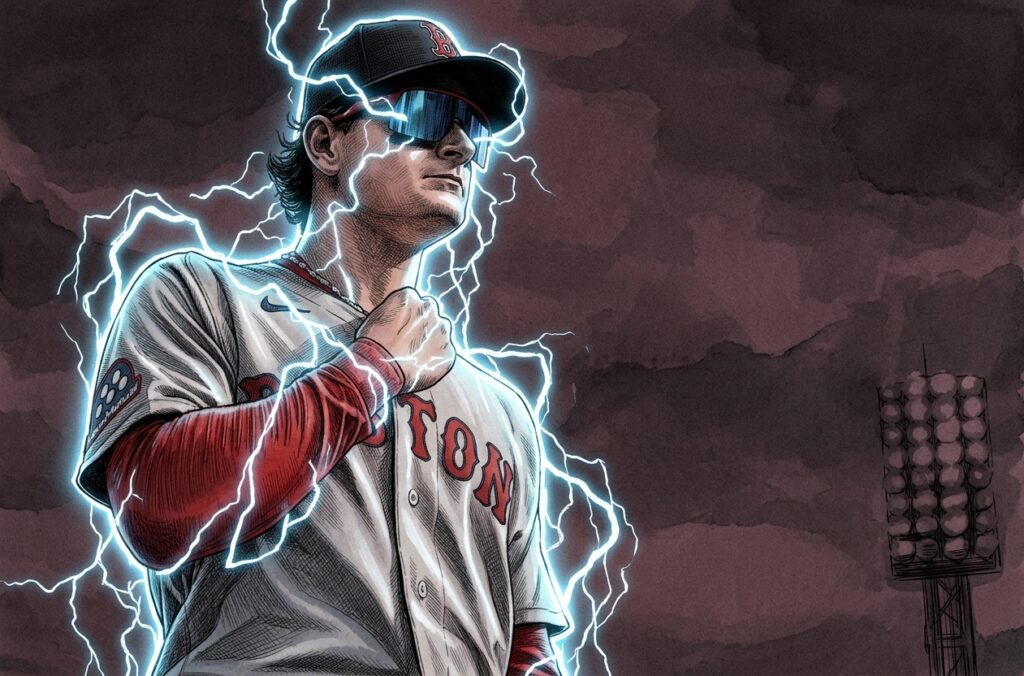
Craig Breslow said the quiet part out loud before the season even started. “It’s an intentional strategy to lean into the ability to keep runs off the board.” That was the plan. Pitching first, defense first, and trust the offense to cobble something together. The Red Sox are 22-30, 5th in the AL East, and with the Red Sox trade deadline 2026 window opening, they’re making calls for right-handed bats they cannot afford to pay for in the currency that matters — pitching depth, which is the entire reason the Devers trade was supposed to make sense in the first place.
This is the trap. And Breslow walked right into it.
The Devers trade broke this team before a pitch was thrown. The Giants sent back Kyle Harrison, James Tibbs III, Jordan Hicks, and Jose Bello. Harrison got traded to Milwaukee. Hicks allowed 17 earned runs in 18.2 innings and got dumped on the White Sox. Tibbs went to the Dodgers. The Red Sox rebuild, built on that return, currently consists of one guy: Jose Bello. One player. And Breslow let Alex Bregman walk at the same time, declining to make a real run at him, while reportedly offering Pete Alonso something so underwhelming the phrase “unserious offer” made the rounds. Two right-handed power bats gone simultaneously. The projected home run leader for this roster entering 2026 was forecast at 18. Eighteen.
The offense was always thin. It’s just that thin offenses depend entirely on staying healthy, and this one hasn’t. Roman Anthony — who was hitting .229/.321 before the IL, not exactly carrying his weight — has been sidelined since early May with a hand/finger injury and suffered a setback trying to swing on May 18. Trevor Story had hernia surgery on May 22 and won’t be back until late July at the earliest. Garrett Crochet went down April 29 with shoulder inflammation. Tanner Houck and Triston Casas are on the 60-day IL. When Breslow designed a roster with almost no offensive redundancy, he was one bad bounce away from running out a lineup posting a 3.65 runs-per-game average — down from 4.85 last year, good for 26th in baseball. They’re 29th in home runs, 29th in runs scored, and carrying a team wRC+ of 89 and a .667 OPS — dead last in the American League. The math on that isn’t complicated.
Ken Rosenthal was already skeptical before any of this happened:
The Red Sox ask too much of their young players, says @Ken_Rosenthal.
"I'd never liked where they were going into the season offensively." pic.twitter.com/TZpUdXINtb
— Foul Territory (@FoulTerritoryTV) April 24, 2026
That’s the part that stings. Rosenthal wasn’t saying this in hindsight. The concern was visible in March.
To be fair to Breslow: Willson Contreras is having a genuinely excellent season — .278/.375/.523, 11 home runs, 33 RBI, 140 wRC+ in roughly 50 games. That’s a legitimate offensive asset. The team isn’t a black hole. The problem isn’t zero offense; it’s that there’s one reliable bat surrounded by guys who need the lineup to be healthy and deep to carry their weight, and it isn’t either of those things right now.
Breslow fired Alex Cora and pointed the finger at himself, saying “ultimately the accountability for the roster falls on me” while announcing the dismissal of a manager, a hitting coach, an assistant hitting coach, a hitting strategy coach, and a bench coach all at once. That’s a strange way to accept responsibility — loudly, while also firing everyone around you. Chad Tracy is the interim manager of a 10-17 team that’s now 22-30.
Here’s what the deadline looks like: Breslow wants right-handed power. The only prospect deemed untouchable is Franklin Arias. Everything else — the pitching depth that was supposed to justify the Devers trade, the assets the Red Sox were supposed to build toward — is now tradeable. Theo Epstein, in an advisor role, said “pitching and defense have been fantastic” and that Breslow and the front office are “hard at work on fixing the offense.” That’s a careful way of saying the team is structurally broken and they’re going to pay a premium to fix it with the same chips they were supposed to be accumulating.
The trade deadline move Breslow probably won’t make is the one that actually solves this. What he’ll probably do instead is trade pieces for a bat that generates the kind of deadline buzz Breslow needs and leaves them right back where they started — not pitching-first anymore, not offense-first, just a team that tried a coherent strategy, got brittle, and spent the assets meant to rebuild to survive a single bad May.
The bet was real. The execution was not.